Understanding Input and Output Resistance
The output resistance of one circuit shouldn't always be matched to the input resistance of another. In this topic we discover the various conditions.

The output resistance of one circuit shouldn't always be matched to the input resistance of another. In this topic we discover the various conditions.
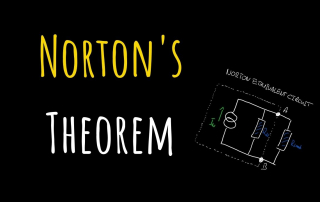
Norton's Theorem transforms a complex circuit to its much simplified equivalent consisting of only a single current source and a resistor in parallel.
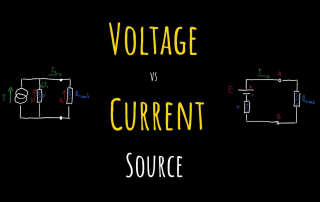
Voltage and Current Sources are often confusing terms. We cover how they both supply voltage and current, yet they differ in which they are good at.
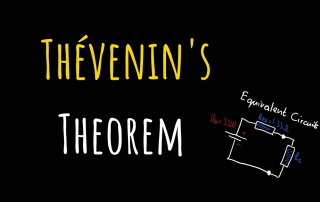
Thévenin's Theorem transforms a complex circuit to its much simplified equivalent consisting of only a single voltage source and a resistor in series.
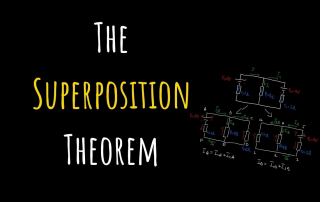
In this topic we cover how to use the Superposition Theorem in order to solve circuits. We do this by considering only one powers source at a time.
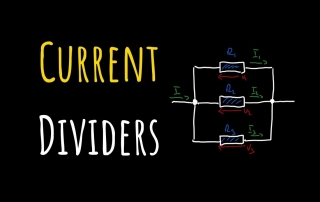
Based on the resistor values, the current is divided in a parallel circuit. The Current Divider theory helps us to find the current in each split.
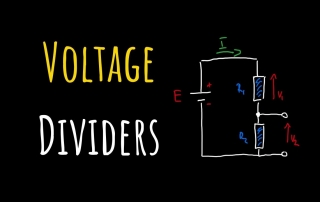
A Voltage Divider is fundamental circuits in electronics. They turn large voltages to smaller ones. Check this topic to see some of the common cases.
In this topic we cover Kirchhoff's Current and Voltage Law that helps us analyse an electric circuit to find the current, voltage or component values.
If 6 million million million electrons pass per second, the current is 1A. Today we touch on Power, Electrical Energy and Maximum Power Transfer theory.
Potential difference is a voltage compared to a reference point. In this topic we break down how this is related to the EMF, current and load in a circuit.